
Modern commercial land development is a high-stakes orchestration of specialized trades, heavy equipment, and strict regulatory schedules. Transforming a raw parcel of land into a fully operational, compliant facility requires general contractors and project managers to master the sequence of trade arrivals. When subcontractors operate in silos, projects face costly downtime, trade stacking, safety hazards, and ballooning budgets.
Achieving maximum efficiency demands a proactive management framework. By understanding the operational overlap between heavy earthmovers, specialized riggers, utility experts, and finishing trades, site managers can streamline timelines while keeping safety and compliance at the forefront.
Establishing the Initial Groundwork and Environmental Due Diligence

Every successful site development project begins long before heavy machinery touches the dirt. The preliminary phase focuses heavily on comprehensive site analysis, environmental risk assessment, and meticulous logistics planning. Conducting thorough geotechnical surveys, soil sampling, and subsurface exploration allows project managers to accurately evaluate soil load-bearing capacities, groundwater tables, and potential environmental contaminants before breaking ground. Failing to identify these hidden subterranean risks, poor drainage conditions, or machinery access limitations at this early stage creates a severe domino effect—resulting in unbudgeted expenditures, structural complications, and cascading schedule delays across every subsequent phase of construction.
For projects situated near waterways, commercial ports, or sensitive coastal zones, maritime logistics often dictate the early project timeline and overall operational flow. Transporting specialized heavy machinery, driven piles, or massive structural components across water via barges requires precise technical verification and strict regulatory adherence. Partnering with a certified marine diesel surveyor during pre-construction ensures that all marine power units, vessel propulsion engines, backup generators, and floating platform systems meet stringent operational safety standards, load capacities, and environmental regulations. Thoroughly verifying engine integrity, fuel efficiency, and mechanical reliability early prevents catastrophic marine equipment failures, costly transit downtime, and hazardous fuel spills during critical offshore transport operations.
Simultaneously, project managers must establish a functional, compliant operational infrastructure on land. Long before primary build crews and sub-contractors arrive, site logistics must accommodate essential human needs, safety compliance, and health protocols. Securing a reliable, scalable portable toilet rental strategy ensures that clean, well-maintained sanitation facilities are strategically distributed across the acreage based on shift sizes and site topography. Strategic placement minimizes non-productive worker transit time, promotes overall jobsite hygiene, and upholds occupational health and safety standards, directly contributing to workforce morale and daily operational efficiency.
Equally crucial to maintaining a safe, organized site is a proactive waste management and debris control strategy. Coordinating local roll-off dumpster rentals well in advance provides designated, high-capacity collection points for early land clearing, brush removal, structural demolition debris, and discarded packaging. Establishing dedicated, clearly labeled containers for concrete rubble, untreated timber, scrap metal, and general refuse supports site-wide sorting initiatives, facilitates local municipal recycling compliance, and aids in tracking waste diversion rates for environmental sustainability goals. Most importantly, keeping scrap and refuse contained keeps vital haul routes free of trip hazards and tire-damaging debris, ensuring smooth, uninterrupted movement for incoming heavy equipment and raw material deliveries.
Executing Heavy Earthwork and Precision Subsurface Utility Operations

Once due diligence is complete and basic logistics are staged, physical site preparation begins in earnest. This critical phase centers on bulk earthmoving, precision grading, and subterranean infrastructure installation—complex tasks that require tight synchronization and clear communication to prevent expensive trade conflicts and site congestion. Establishing clear working zones and establishing a strict sequence of operations ensures that multiple heavy equipment fleets can work safely alongside one another without bottlenecking primary haul routes.
Initial site shaping relies heavily on mass excavation to clear organic topsoil, establish stable subgrades, dig deep foundations, and create retention basins. Engaging a highly skilled, licensed excavating contractor ensures that heavy earthmoving equipment—such as high-capacity bulldozers, hydraulic excavators, articulators, and motor scrapers—operates with maximum efficiency across challenging terrain. The primary objective during mass grading is carefully balancing cut-and-fill volumes across the site’s topography, which minimizes the need for expensive off-site soil imports or haul-away dumping fees while ensuring long-term slope stability and proper stormwater runoff management for future structures.
However, traditional heavy earthmoving presents significant operational risks when working near established utility corridors or urban interfaces. Accidentally striking an unmapped underground gas line, high-bandwidth fiber optic trunk, or high-voltage electrical conduit can halt a multi-million dollar project instantly, trigger severe regulatory fines, and endanger human lives. To mitigate these catastrophic risks, modern site development projects integrate non-destructive vacuum excavation technology seamlessly alongside conventional mass earthmoving methods.
Bringing in a specialized hydro excavating crew allows site operators to break up compact soil and dense clay using high-pressure water streams while simultaneously vacuuming the resulting slurry into a truck-mounted debris tank. This surgical precision exposes buried utilities, tree root systems, and sensitive infrastructure without damaging delicate cables, insulation, or piping. General contractors must strategically schedule hydro-excavation crews to pothole, verify utility depths, and clear sensitive dig zones immediately ahead of the mass earthmoving equipment, establishing a verified safe path that guarantees continuous project progress without compromising site safety.
Managing Vertical Construction and Heavy Equipment Logistics
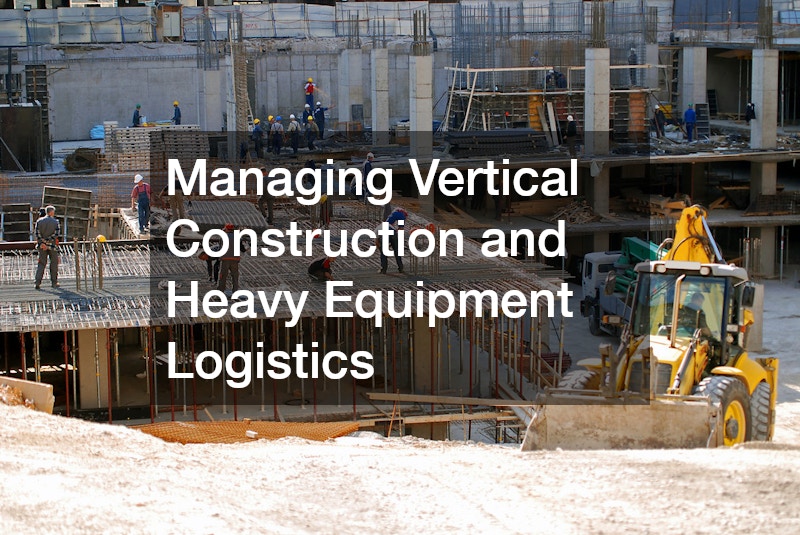
As foundation footings solidify and site utility mains are set, project priorities shift from ground operations to vertical assembly and structural setting. This transition introduces complex rigging and heavy placement challenges that demand precise schedule alignment.
Erecting structural steel, placing precast concrete panels, and positioning rooftop HVAC units require specialized lifting capability. Securing a certified crane rental provider requires detailed advance planning, including crane pad compaction tests, outrigger load calculations, and swing-radius clearances. General contractors must coordinate crane arrival so that structural components arrive on flatbed trailers in exact installation order, avoiding staging congestion on restricted sites.
Parallel to crane operations is the interior and exterior placement of heavy industrial machinery. Industrial facilities often require the installation of massive generators, manufacturing presses, or specialized processing systems. Hiring dedicated machinery moving experts ensures that heavy, high-value equipment is safely offloaded, skidded, and anchored into position without damaging finished slabs or structural frames. Coordinating crane operators with machinery movers prevents bottlenecks during structural enclosure.
Enclosing the Building Envelope and Weatherproofing Operations
Once the primary structural frame is fully erected and major mechanical equipment is set within the building footprint, securing the exterior building envelope becomes the project team’s highest priority. Rapidly protecting the interior space from rain, wind, airborne moisture, and extreme temperature fluctuations creates a weather-tight environment, allowing internal mechanical, electrical, plumbing (MEP), and fire suppression trades to commence rough-in work without the constant threat of weather-related interruptions or water damage to sensitive components.
Roofing operations are especially critical during this phase to establish a permanently dry environment below. Engaging experienced, certified commercial roofing contractors ensures that high-performance, code-compliant roofing systems—such as single-ply TPO, EPDM, built-up modified bitumen, or standing seam metal panels—are installed rapidly and correctly over structural steel or concrete decks. Beyond simple membrane application, this process requires careful integration of thermal insulation boards, vapor retarders, cover boards, and perimeter edge details engineered to withstand high wind uplift forces and harsh environmental conditions.
To maintain momentum, general contractors must tightly coordinate roof installation with structural steel crews working below and mechanical contractors operating above. Rooftop HVAC unit curbs, structural equipment supports, skylights, exhaust vents, and complex penetration flashings must be set and detailed in perfect sync with the primary roofing membrane to prevent catastrophic leaks. Any misstep or poor seal around a penetration can compromise the entire roofing system, creating hidden water intrusion paths that degrade insulation values and ruin interior elements.
Securing the roof envelope early creates a stable climate within the structure, protecting costly indoor equipment, transformers, and air handlers while allowing moisture-sensitive interior finishes—such as drywall hanging, electrical wiring, duct insulation, and millwork—to proceed steadily regardless of outside weather conditions. Ultimately, prioritizing the envelope timeline safeguards the budget, prevents mold growth risks, and keeps the overall master schedule firmly on track toward practical completion.
Securing Access, Exterior Finishes, and Final Regulatory Approval
The final phase of site development successfully ties the physical structure to its surrounding civic infrastructure, transforming an active construction zone into a fully functional, aesthetic, and operational commercial or residential asset. This crucial closing stage focuses on installing heavy-duty exterior hardscapes, paving and striping parking facilities, executing precision final grading, and ensuring the entire property seamlessly satisfies all municipal, state, and legal accessibility standards. Proper management during this window prevents costly delays in securing final approvals and ensures that the transition from construction to occupancy is smooth, seamless, and fully compliant with local land-use mandates.
Establishing safe, legally compliant access routes for all visitors and employees is an absolute prerequisite before securing final certificates of occupancy from local building authorities. Working alongside a qualified ADA compliance contractor guarantees that every exterior van-accessible parking stall, concrete curb ramp, main building entrance, walkway, and interior transition pathway strictly adheres to Federal Americans with Disabilities Act accessibility guidelines and local building codes. Precise construction tolerances must be maintained—running slopes, cross-slopes, handrail heights, door clearances, and truncated dome tactile warning surfaces must fall strictly within legal margins. Proactively catching non-compliant grade transitions or improper concrete slope pours during the initial framing and pouring phase avoids devastatingly expensive demolition, re-pouring, and scheduling delays during final municipal inspections.
Furthermore, integrating comprehensive final grading and surface drainage systems during this phase protects both the new hardscapes and foundational elements from long-term water damage. Properly pitched asphalt parking lots, perimeter swales, and interconnected retention systems ensure storm runoff is safely directed away from structures, preventing surface pooling and premature pavement erosion.
Throughout this intense final push, site-wide waste management operations remain absolutely vital to maintaining jobsite productivity and safety. The closing stages of construction—dominated by interior finish trades, MEP (mechanical, electrical, plumbing) trim-out, landscaping, and final cosmetic detailing—generate an enormous volume of cardboard packaging, drywall offcuts, lumber scrap, pallet debris, and hazardous packaging materials. Maintaining active, strategically placed local dumpster rentals through the final site handover keeps designated emergency egress points and fire pathways completely clear, minimizes dust accumulation, and facilitates a fast, efficient final site cleanup. A clean, organized site not only presents a professional image to inspectors and owners but also significantly reduces trip hazards for finishing trades working on tight project deadlines.
Frameworks for Subcontractor Alignment and Communication

By establishing an integrated master schedule through advanced Building Information Modeling (BIM 4D/5D) platforms and rigorous Critical Path Method (CPM) tools, modern project managers can accurately visualize complex multi-trade interactions and spatial logistics in real time. This micro-phased approach ensures every prime contractor and specialized vendor fully comprehends how their specific milestone delivery directly impacts downstream subcontractors and critical path activities. When trade leaders see the full structural sequence and site layout laid out dynamically in a shared visual environment, they can adjust their workforce allocations, equipment deployments, and material procurement orders proactively weeks in advance, rather than reactively scrambling when bottlenecks inevitably arise on-site.
Implementing daily pull planning huddles further bridges the gap between high-level scheduling models and field-level execution by bringing trade foremen into direct operational alignment every morning. These short, hyper-focused lean construction sessions review active work zones, map out upcoming heavy equipment movements, and coordinate precise material deliveries over rolling 48-to-72-hour windows. Proactively communicating these daily physical footprints and hoisting requirements eliminates spatial conflicts on tight urban sites, prevents trade stacking, and stops specialized installation teams from stepping on each other’s toes during high-volume work phases.
Developing centralized, strictly enforced site logistics protocols maintains total operational order across every square foot of the property throughout the project lifecycle. Designating explicit, high-efficiency material staging zones, establishing dynamic crane exclusion corridors, enforcing strict waste segregation procedures, and strategically positioning worker amenities like temporary sanitation facilities keeps daily labor routines flowing seamlessly. Maintaining rigorous, centralized control over site access points and delivery schedules prevents expensive equipment gridlock, avoids delivery vehicle queuing on public roadways, and safeguards the overall baseline construction timeline.
Ultimately, market-leading general contractors master site development by actively synthesizing the synchronized efforts of heavy earthmovers, technical surveyors, specialized riggers, envelope contractors, and third-party compliance specialists into a unified force. Aligning these specialized trades around clear communication pipelines, collaborative problem-solving frameworks, and shared accountability structures consistently delivers high-complexity projects on schedule, well within budget, and to the absolute highest standards of jobsite safety and engineering quality.