For many business owners, a warehouse is the lifeblood of their operation. It houses the inventory, specialized equipment, and raw materials that represent years of investment and hard work. However, the very nature of a warehouse—often located in isolated industrial parks with large footprints and multiple entry points—makes it a prime target for organized theft. While most owners invest in high-tech alarm systems and motion-activated cameras, professional burglars often look past the electronics to find the physical weaknesses in the building’s “shell.”
A security system is only as effective as the physical barriers it monitors. If a burglar can gain entry, load a vehicle, and exit within minutes, even the fastest police response may be too late.
Understanding the specific physical vulnerabilities that criminals scout for is the first step in hardening your facility and ensuring that your assets remain secure behind truly formidable defenses.
Entry Points and the Illusion of Security
The most obvious vulnerability in any warehouse is the sheer number of ways to get inside. Burglars typically begin their reconnaissance by looking at the condition of the exterior doors and windows. In many older facilities, personnel doors are equipped with standard commercial locks that can be easily defeated with a heavy-duty pry bar or a cordless grinder. If a door frame shows signs of rust or misalignment, a criminal knows that a single well-placed blow could bypass the locking mechanism entirely.
Loading docks and overhead doors are even more significant points of interest. Because these doors are used constantly throughout the day, they are prone to mechanical wear that creates small gaps at the top or bottom. A gap of just an inch or two is often enough for a thief to insert a hook or a wire to release the emergency manual pull-cord, allowing the door to be lifted from the outside without triggering a motor alarm. Furthermore, burglars look for “outdated” gate systems that lack modern anti-lift technology.
To address these structural weak points, many facility managers find it essential to consult with an experienced commercial garage gate company to perform a comprehensive security audit. These professionals can identify if your current overhead doors are rated for high-security environments or if they are simply standard-gauge barriers that offer little more than weather protection. Upgrading to heavy-duty, interlocked slats and installing specialized floor-locking pins can turn a vulnerable loading bay into an impenetrable wall, forcing a burglar to move on to an easier target.
Lighting, Perimeter Blind Spots, and “Social” Reconnaissance
Burglars love the dark, but they love “predictable” light even more. A common mistake in warehouse security is having motion lights that are either too sensitive or too slow to react. If a light is constantly triggered by a passing cat or a swaying tree branch, employees eventually ignore the visual cue, and the “surprise” element for a burglar is lost. Professionals look for areas where shadows overlap—places where they can work on a lock or a hinge without being silhouetted against the building.
Beyond the lighting, the perimeter of the property often hides “clues” that the facility is ripe for a hit. Piles of empty pallets stacked against a wall can act as a ladder to second-story windows or roof hatches. Overgrown vegetation near the fence line provides the necessary cover for a thief to spend time cutting through a chain-link barrier. Burglars also observe the “trash.” Discarded packaging for high-value electronics or luxury goods in the communal dumpster tells a criminal exactly what kind of “prizes” are waiting inside.
Modern burglars also engage in a form of social reconnaissance. They may pose as delivery drivers or maintenance workers to get a look at the interior layout during business hours. They are looking for the location of the high-value cage, the position of the internal cameras, and, most importantly, the habits of the staff. If they notice that a bay door is left open for ventilation on a hot afternoon or that the gate is left unlatched during a shift change, they have found their window of opportunity. Security is as much about culture as it is about hardware.
The Roof, Skylights, and Ventilation Vulnerabilities
When the ground-level doors are too secure, many professional thieves simply look up. The roof of a warehouse is often the most neglected part of a security plan. Most industrial buildings feature large skylights designed to reduce energy costs by providing natural light. Unfortunately, these are often nothing more than thin sheets of acrylic or plastic that can be cut or popped out in seconds. Once on the roof, a burglar has all the time in the world to work, away from the prying eyes of passing patrol cars.
Securing these areas requires a “top-down” approach. Installing steel security bars beneath skylights and motion sensors within the HVAC ducting can close these hidden loops. Additionally, reinforcing the “last line of defense”—the internal high-value storage area—with its own dedicated floor-to-ceiling cage and separate access control ensures that even if a burglar breaches the outer shell, they cannot access the most critical inventory.
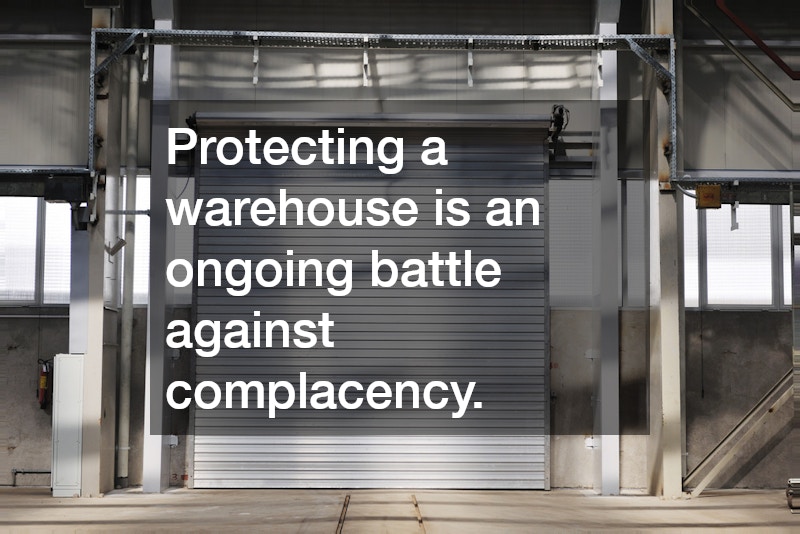
Protecting a warehouse is an ongoing battle against complacency. Burglars are constantly evolving their methods, looking for the one rusted hinge, the one unmonitored skylight, or the one outdated gate that will grant them access. By thinking like a criminal and identifying these hidden vulnerabilities before they do, you can build a defense that is truly comprehensive. From the precision of the hardware provided by a commercial garage gate company to the daily vigilance of your staff, every layer of protection adds to the “deterrence factor.” A secure warehouse is one where the physical barriers are so daunting that the “ticking time bomb” of a potential break-in is defused before it ever begins.