We explore the pivotal role civil engineers play in overcoming common challenges in the construction industry. From ensuring project safety to managing environmental impacts, these professionals are at the forefront of innovative solutions. By delving into the most common inquiries related to their work, we can gain valuable insight into this complex field.
How do civil engineers ensure safety in construction projects?
Civil engineers are instrumental in ensuring safety on construction sites through a variety of strategies. They perform rigorous risk assessments and develop detailed safety plans before ground is broken. Additionally, civil engineers implement safety training programs to educate workers on best practices. Technology, such as drones and wearable sensors, is also used to monitor site conditions and worker health. The goal is to proactively identify potential hazards and mitigate risks to prevent accidents.
Another critical aspect of safety management involves regular site inspections conducted by civil engineers. These inspections ensure that safety protocols are strictly followed and that equipment and structures meet safety standards. Civil engineers also enforce adherence to regulations set by governmental and safety organizations. Ensuring compliance not only protects workers but also reduces the likelihood of project delays caused by safety violations. Ultimately, the expertise of civil engineers is essential in fostering a culture of safety within the construction industry.
What methods do civil engineers use to manage project costs?
Cost management is a fundamental responsibility for civil engineers, who employ various methods to keep projects within budget. Detailed cost estimation is crucial, where civil engineers assess material, labor, and operational expenses. By employing such precise calculations, they can create realistic budgets that guide project expenditure. Civil engineers also prioritize cost control by monitoring expenses meticulously throughout the project lifecycle. Regular financial reviews help identify discrepancies early, allowing for timely corrective actions.
Value engineering is a technique civil engineers often use to optimize project costs without compromising quality. This involves analyzing functions of different components and finding cost-effective alternatives. Civil engineers work closely with suppliers and procure materials strategically to negotiate better pricing. Adopting efficient construction methods and technologies also plays a significant role in cost management. By reducing waste and enhancing productivity, civil engineers can further control project expenses.
How do civil engineers address environmental concerns in construction?
Civil engineers play a crucial role in addressing environmental concerns by championing sustainable practices. They evaluate ecological impacts during the planning and design phases to minimize the environmental footprint of construction activities. Green building techniques, such as the use of recycled materials and energy-efficient designs, are prioritized. Additionally, civil engineers often implement erosion control measures and stormwater management systems to protect natural ecosystems. These steps are essential in achieving eco-friendly construction projects.
Incorporating renewable energy sources into construction is another way civil engineers mitigate environmental impacts. Solar panels, wind turbines, and geothermal systems are increasingly being integrated into project designs. By reducing reliance on fossil fuels, civil engineers help lower greenhouse gas emissions. Professional certifications, such as LEED (Leadership in Energy and Environmental Design), guide civil engineers in implementing sustainable practices. Such certifications emphasize resource conservation, further aligning construction projects with environmental goals.
What role do civil engineers play in innovative construction technologies?
Civil engineers are at the forefront of leveraging innovative construction technologies to enhance project outcomes. They integrate technologies like 3D printing, which allows for custom and rapid fabrication of building components. This innovation not only reduces material waste but also accelerates project timelines. Drones are another tool civil engineers utilize for site surveying and progress monitoring, offering a bird’s-eye view of construction activities. Such technologies improve precision and efficiency in construction processes.
Building Information Modeling (BIM) has revolutionized how civil engineers design, plan, and execute projects. BIM creates dynamic models that facilitate collaboration across disciplines, reducing design conflicts and enhancing project efficiency. Civil engineers can visualize project designs in a virtual space, identifying potential issues before construction begins. The use of BIM also improves resource management, leading to more sustainable project execution. These advancements highlight the critical role of civil engineers in technological integration.
How do civil engineers coordinate with other professionals on construction projects?
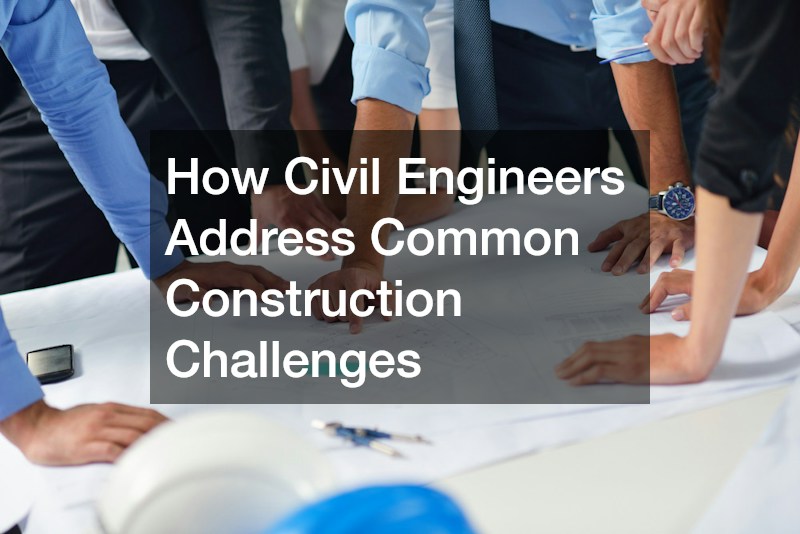
Successful construction projects require effective collaboration among various professionals, with civil engineers playing a central role. They act as a bridge between architects, contractors, and project managers, ensuring that all parties are aligned on project goals. Clear communication is vital, and civil engineers facilitate regular meetings and updates. This coordination ensures that design intent is preserved and project timelines are adhered to. Such collaboration is integral to executing complex construction projects smoothly.
Civil engineers are essential in overcoming the myriad challenges that arise in construction. Their expertise and adaptability are vital in ensuring the successful completion of safe, cost-effective, and environmentally friendly projects. As the industry continues to evolve, the innovative approaches of civil engineers will play a critical role in shaping the future of construction. These professionals not only meet today’s demands but are also paving the way for a more sustainable and collaborative industry. The leadership and innovation demonstrated by civil engineers are indispensable in advancing construction methodologies and outcomes.